
This week’s exploration of disinformation highlighted how vulnerable social media users can be to misleading or intentionally false information, and how education is one of the most effective defenses against it. By playing the serious games Get Bad News and Fakey, I was able to experience firsthand how disinformation is created, spread, and detected, which strongly reinforced the ideas discussed in the lecture and the reading by Shu et al. (2020).
The first game, Get Bad News, places the player in the role of a disinformation creator. Instead of identifying fake news, the goal is to produce it by using emotionally charged language, impersonating credible sources, spreading conspiracy theories, and leveraging polarization to gain followers. At first, this felt uncomfortable, but that discomfort was intentional. By actively engaging in these deceptive strategies, I became more aware of how easily social media users can be manipulated. This game closely reflects the lecture’s discussion of how sensationalized content spreads faster than accurate information and how emotional reactions increase sharing behavior.
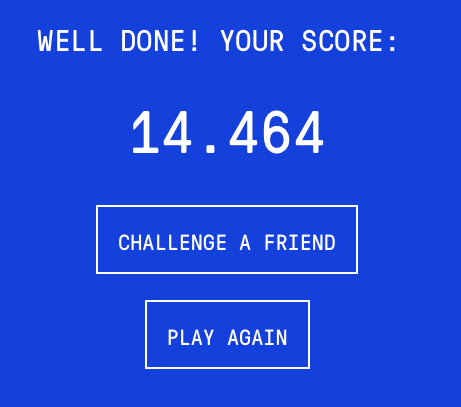
The second game, Fakey, focuses on media literacy from the perspective of a social media user. The objective is to interact with a simulated news feed and decide which articles to like, share, fact-check, or ignore. Over time, the game teaches players to look for signals of credibility, such as reliable sources, balanced language, and verification cues. Fakey strongly connects to Shu et al.’s (2020) emphasis on educated information consumers as a key defense against disinformation. It also mirrors the lecture’s point that people are more likely to believe information that aligns with their existing beliefs or appears popular.
Between the two games, Get Bad News resonated with me the most because it revealed the psychology behind disinformation creation. Understanding the “behind-the-scenes” tactics made me more skeptical of viral content and more mindful of my own emotional responses online. These games demonstrated that combating disinformation is not just a technical problem but a human one. Education, awareness, and critical thinking are essential tools in slowing the spread of false information
References (APA Style)
Shu, K., Bhattacharjee, A., Alatawi, F., Nazer, T. H., Ding, K., Karami, M., & Liu, H. (2020). Combating disinformation in a social media age. WIREs Data Mining and Knowledge Discovery, 10(6), e1385. https://doi.org/10.1002/widm.1385
Get Bad News. (n.d.). From fake news to chaos! https://www.getbadnews.com/books/english/complete
Fakey. (n.d.). Teaching media literacy through gameplay. https://fakey.osome.iu.edu/
 Site Title
Leave a comment